Treasury targets stronger revenue as KZN rebuilds provincial finances
KZN exceeded its own revenue target for 2025/26 by about 6,7%, which Rodgers attributed to improved collection by several departments.
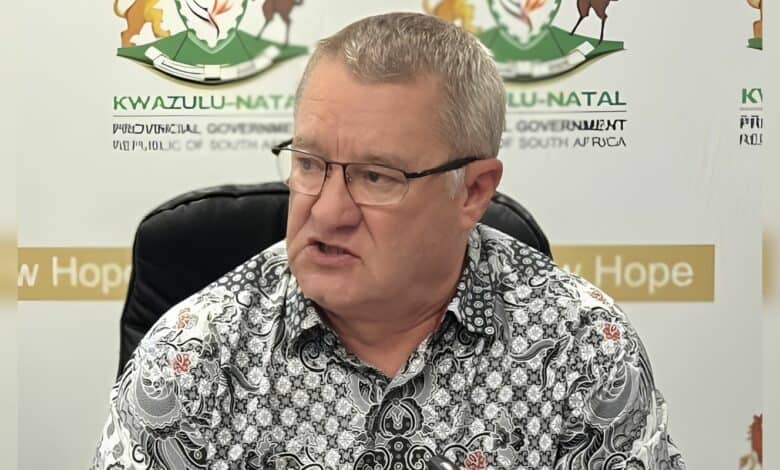

KwaZulu-Natal has intensified its financial recovery programme and revenue collection drive as the province attempts to rebuild fiscal stability, curb waste and strengthen the finances of struggling municipalities.
Tabling the KZN Treasury’s R756 million budget for 2026/27, Finance MEC Francois Rodgers said the Provincial Financial Recovery Plan had moved from policy development to the implementation of measures aimed at restoring discipline across departments and municipalities.
ALSO READ | National Treasury withholding municipal funds
At the same time, Treasury will target additional revenue from transport services, health facilities, gambling and betting taxes, seashore leases, licences, fines and the recovery of debts owed by government employees.
The province exceeded its own-revenue target for 2025/26 by about 6,7%, which Rodgers attributed to improved collection by several departments.
The KZN Treasury had planned to collect R341 million but recorded an additional R6 million, largely through interest earned from investing provincial funds.
“In a constrained fiscal environment, revenue optimisation is essential,” Rodgers said.
Revenue initiatives during the new financial year will include strengthening income streams in the departments of Transport, Economic Development, Tourism and Environmental Affairs, and Health, as well as improving the recovery of staff debt in the Department of Education.
ALSO READ | Treasury defends decision to withhold R13.5bn from municipalities
Treasury will also advance the KwaZulu-Natal Gaming and Betting Tax Bill and seek to increase income generated from provincial assets, leases and regulatory charges.
Rodgers said the recovery plan remained the province’s central mechanism for fiscal consolidation and institutional reform.
“The true measure of success is not the existence of a plan, but the implementation of its interventions,” he said.
We continue to work with departments and municipalities to restore fiscal discipline, improve oversight and strengthen accountability across government.
The plan is divided into six workstreams covering departmental and municipal support, financial governance, revenue enhancement, expenditure reduction, information technology, and organisational change.
Measures already implemented include ring-fencing funds for infrastructure and lease payments, verifying accruals in the Education Department, and improving supplier-payment processes in Social Development.
Cost-optimisation initiatives in the Health Department had also produced estimated savings of about R500 million.
ALSO READ | Treasury freezes funding for KZN, dozens of municipalities
However, Rodgers acknowledged that accumulated accruals, poor historical revenue performance and overspending continued to restrict the province’s financial room.
“The recovery process is neither quick nor easy,” he said.
What is critical is that we now have a credible pathway to recovery. That pathway requires sustained discipline, difficult decisions, and unwavering commitment to financial governance.
Treasury will introduce a province-wide invoice-tracking system to improve oversight of payments and prevent departments from building up unpaid bills.
Rodgers said supplier-payment performance remained a serious concern, with only slightly more than half of invoices paid within the required 30 days at the end of the financial year.
“The reality, Madam Speaker, is that departments cannot spend money they do not have. And yet, too often, commitments are made without the necessary funding,” he said.
ALSO READ | KZN Cabinet summons municipalities under Treasury spotlight
The province will also continue enforcing cost-containment measures, reviewing personnel structures and assessing departmental budgets to identify savings without undermining essential services.
“Let me be clear: Cost containment is not austerity against citizens. It is discipline against waste,” Rodgers said.
Treasury itself saved more than R10 million by applying cost-cutting measures during 2025/26 and spent 98% of its allocated budget.
The department’s R756 million allocation represents a 6% increase on the previous year, largely because funds suspended in 2025/26 were carried into the new budget to finance critical recovery-plan interventions.
Rodgers said progress had also been made in municipalities. The number of councils adopting unfunded budgets had declined from 19 last year to six this year.
However, 27 municipalities remained financially distressed and would continue receiving support through the Municipal Rescue Plan.
ALSO READ | KZN Treasury MEC Rodgers sounds alarm over municipal debt crisis
Weak revenue collection, rising debt and liquidity shortages remained major threats to municipal sustainability.
Unfunded budgets will not be accepted this year and every effort is being made by my team to ensure that councils approve funded budgets.
He said the province’s objective was to build a government and municipal sector that spent within its means, paid service providers, upheld the law and placed service delivery at the centre of financial decisions.