WATCH | Fuel price hikes squeeze businesses and households as food costs surge
The PMBEJD reported that the city's basic monthly food basket increased by R248,25 to R5 251,02, while the national average rose to R5 452,09.

Relentless fuel price increases are beginning to take a visible toll on Pietermaritzburg’s economy, with businesses, commuters and households feeling the impact.
The price of 93-octane petrol is now R27,95 a litre, while 95-octane petrol costs R28,06.
ALSO READ | Fuel price hikes to hit hard despite slight relief
Diesel prices eased to R27,92 a litre for 0,05% sulphur diesel and R28,76 for 0,005% sulphur diesel.
The Pietermaritzburg Economic Justice and Dignity Group (PMBEJD) reported that the city’s basic monthly food basket increased by R248,25 to R5 251,02, while the national average rose to R5 452,09.
“Rising fuel costs are a double-edged sword for business, because all input costs rise, as do delivery costs, eroding margins and necessitating price increases, and consumers have less disposable income and therefore cut spending,” said Melanie Veness, chief executive officer of the Pietermaritzburg and Midlands Chamber of Business.
The multiplier effect of the rapidly escalating fuel prices is undoubtedly eroding business sustainability and constraining economic growth.
According to the PMBEJD, fuel accounts for between 12% and 18% of farm production costs, meaning increases at the pumps feed directly into food prices.
ALSO READ | Calls mount for government to provide more relief as fuel prices rise
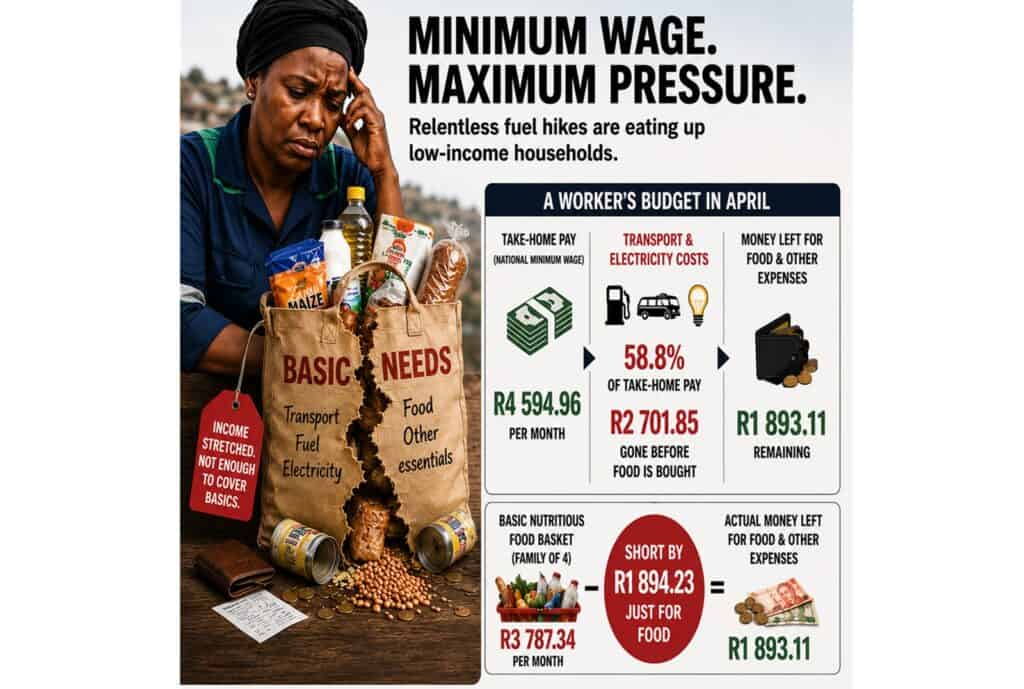
A worker earning the national minimum wage took home R4 594,96 in April.
However, almost 59% of that income was consumed by transport and electricity costs before any food was purchased.
After covering these essentials, households were left with R1 893,11 for food and other expenses, despite a basic nutritious food basket for a family of four costing R3 787,34.
The cost of feeding a child a nutritious diet also increased to R964,94 a month, well above the Child Support Grant of R580.
Meanwhile, taxi associations have announced fare increases of more than R4 on some routes as operators attempt to offset rising fuel and operating costs.
“We have held the price increase for the past two years, but continuous fuel increases forced the council to increase taxi fares,” said Sifiso Shangase, spokesperson for Santaco KwaZulu-Natal.
The latest fuel price adjustments, which came into effect on Wednesday, saw diesel prices decrease by as much as R3,25 a litre, providing relief to transport and logistics companies.
ALSO READ | Fuel price increase to drive food prices up
However, petrol increased by R1,43 a litre, raising concerns about the broader impact on consumers and public transport users.
At the Market Square taxi rank in Pietermaritzburg, commuters told The Witness that a recent R4 fare increase had forced many families to make difficult sacrifices.
“The increase in taxi fares means we must cut down on food and some important essentials we use for a living,” said one commuter.
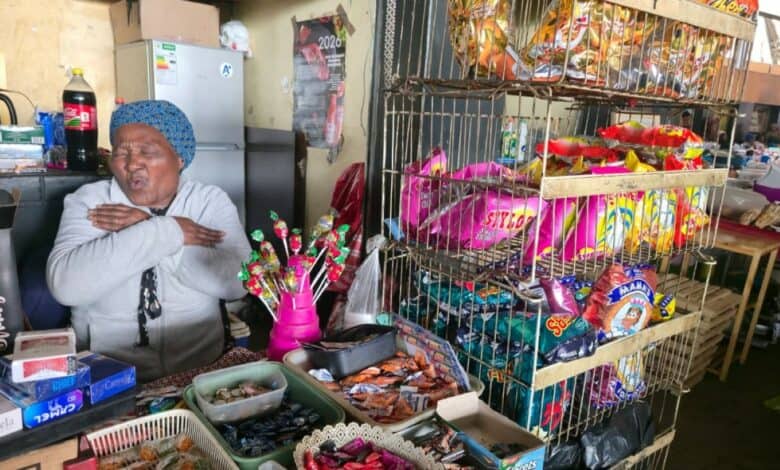
A street vendor said government should urgently intervene to address the crisis.
She added that fewer people were buying food because a larger share of their income was being spent on transport.
The Road Freight Association (RFA) welcomed the diesel price reduction but warned that the industry’s challenges were far from over.
RFA chief executive Gavin Kelly said diesel accounts for between 30% and 50% of a typical freight operator’s costs and that the reduction would provide some relief to trucking companies that had absorbed months of elevated fuel prices.
ALSO READ | Chatting to AA CEO Ramagwede about the Middle East conflict’s effect on global fuel prices
However, Kelly cautioned that increases in other fuel-related charges were eroding the savings.
The RFA has called on National Treasury and the Department of Mineral and Petroleum Resources to develop a long-term solution to South Africa’s fuel-pricing challenges and reduce the sector’s exposure to international price shocks.