Umeda turns to heritage, scenery to attract film productions
The HS Msimang Museum tells the country's history through the lens of one influential family — the Msimang family
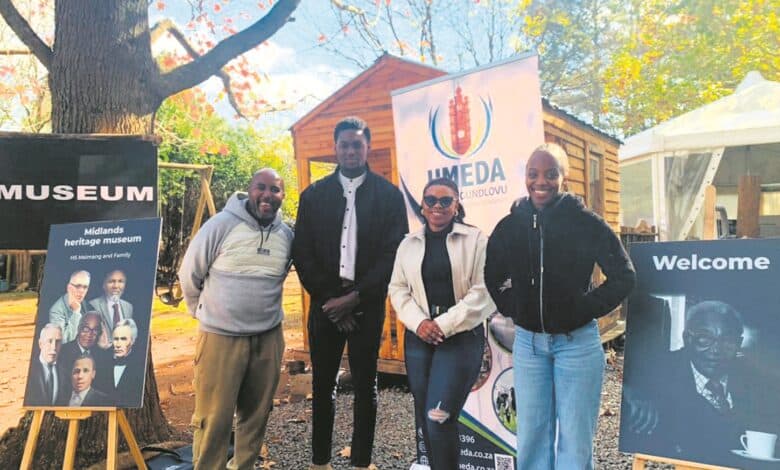

The uMgungundlovu Economic Development Agency (Umeda) Film Office has taken a significant step in deepening its understanding of South Africa’s layered past, following a recent visit to the HS Msimang Museum in Howick.
The HS Msimang Museum tells the country’s history through the lens of one influential family — the Msimang family.
Situated along the R103, just metres from the Nelson Mandela Capture Site in the KZN Midlands, the museum occupies a symbolic location within a landscape rich in historical memory.
ALSO READ | Umeda’s Netflix-linked project puts KZN Midlands on global film map
The visit follows Umeda’s successful History and Filming Forum held on May 18, forming part of broader efforts to connect storytelling, heritage and the creative economy.
Founded and curated by Leko Msimang, the museum officially opened in November last year and has since positioned itself as a unique space where personal family history intersects with national narratives.
Rather than presenting history as distant and fragmented, it weaves together centuries of South African experience through the Msimang lineage.
The exhibitions trace pivotal moments, beginning with early conflicts such as the Battle of Blood River (Impi yaseNcome) and extending to the Anglo-Zulu War of 1879, including the Battle of Isandlwana.
The story continues through the development of Edendale and Georgetown, and the arrest of Chief Langalibalele, the hereditary leader of the amaHlubi, all contextualised within broader colonial expansion and resistance.
ALSO READ | Umeda and ‘The Witness’ join forces to promote investor confidence
Central to the museum’s narrative is the role of the Msimang family itself. From Reverend Joel Msimang, who founded the Independent Methodist Church in 1905, to later generations who contributed to political thought and organisation, the family’s legacy reflects a continuous thread of leadership and activism.
The contributions of figures such as Henry Selby Msimang, a founding member of the African National Congress, are notable, alongside the lives of his contemporaries, including Richard William Msimang. Leko Msimang said the museum’s approach to storytelling had resonated strongly with visitors.
“The feedback has been really amazing since the museum opened. People appreciate that this history is being told differently from what they’ve seen before. Some have said they felt they had been robbed of this rich history until they walked into this space,” he said.
Umeda general manager James Martin said the visit formed part of a broader strategy to identify and connect heritage and filming opportunities across the district.
In the next few weeks, Umeda will be calling on interested parties who have access to historical resources, as well as those who have what we call filming assets — in other words, beautiful scenery.
Martin said the initiative marked the beginning of a wider process to map out the region’s potential for the film industry.
“This is the first step in a number of steps where the Film Office will be developing a database of all stakeholders who may benefit from international films being made in this area,” he said.
• This article was produced in collaboration with uMgungundlovu Economic Development Agency (Umeda).