UKZN scientist helps reveal scale of global biodiversity crisis
The report highlighted how advances in artificial intelligence, digitisation and global data-sharing are transforming conservation efforts.

A major international report has warned that the true scale of the global biodiversity crisis remains largely unknown, with thousands of plant and fungal species at risk of extinction and many more yet to be discovered.
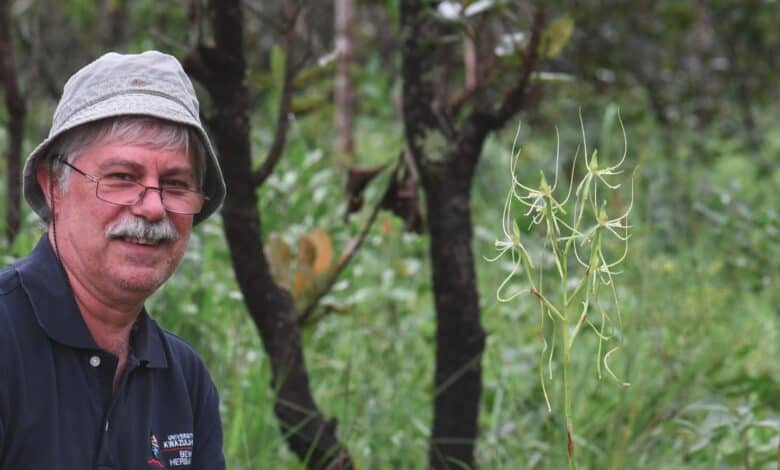
The latest State of the World’s Plants and Fungi 2026 report, released by the Royal Botanic Gardens, Kew in the United Kingdom, brings together the work of more than 400 scientists from 40 countries, including University of KwaZulu-Natal (UKZN) researcher Professor Benny Bytebier.
ALSO READ | DUT professor ranked third-best environmental scientist in SA
Bytebier is curator of UKZN’s Bews Herbarium in Pietermaritzburg, which houses more than 250 000 plant specimens and is one of South Africa’s most important botanical collections.
The report highlighted how advances in artificial intelligence, digitisation and global data-sharing are transforming conservation efforts by helping scientists identify threatened species and fill critical knowledge gaps.
It also revealed that nearly 30 000 plant species and 411 fungal species are currently threatened with extinction, while only 18% of known plant species and 0.6% of fungal species have been formally assessed.
According to the report, fewer than 16% of the world’s herbarium specimens have been digitised, leaving major gaps in scientific knowledge, particularly in the Global South.
UKZN said the role of Bews Herbarium and the recent digitisation of all 250 000 specimens in its collection has become more important as a quarter of specimen labels have already been transcribed and added to a searchable database.
ALSO READ | Broken bottles in Ferncliffe Reserve raise environmental alarm
The work forms part of broader efforts to make biodiversity data more accessible to researchers worldwide.
Bytebier recently collaborated with researchers from the South African National Biodiversity Institute (SANBI), Mauritius, Madagascar and Belgium on projects aimed at expanding digitisation of botanical collections across Africa and the Western Indian Ocean region.
The report found that digitised collections are already yielding significant scientific breakthroughs.
Researchers have used artificial intelligence to analyse eight million digitised herbarium specimens, revealing that flowering times have shifted by an average of 2.5 days per decade over the past century as a result of climate change.
Scientists are also unlocking genetic information from centuries-old fungal specimens, opening new possibilities for medicine, crop protection and disease research.
ALSO READ | Emalahleni Local Municipality fined R650m for water and environmental pollution
Bytebier said the report highlights both the progress being made and the challenges that remain.
This report is very important as it summarises how we are doing with describing, documenting and conserving our plants and fungi at a global scale. I’m happy that the Global North takes notice of our efforts in digitising the rich biodiversity in the Global South, despite the challenges and lack of resources.
The report concludes that improving and sharing biodiversity data is one of the fastest and most cost-effective ways to strengthen conservation efforts and prevent future extinctions.
It also called for stronger collaboration between scientists, governments, environmental organisations and the technology sector to accelerate biodiversity research and guide conservation action worldwide.