Ramaphosa seeks temporary pause, not end to impeachment inquiry — court hears
The relief sought by Ramaphosa, his counsel told the court, was temporary and would automatically lapse once the review judgment was delivered.
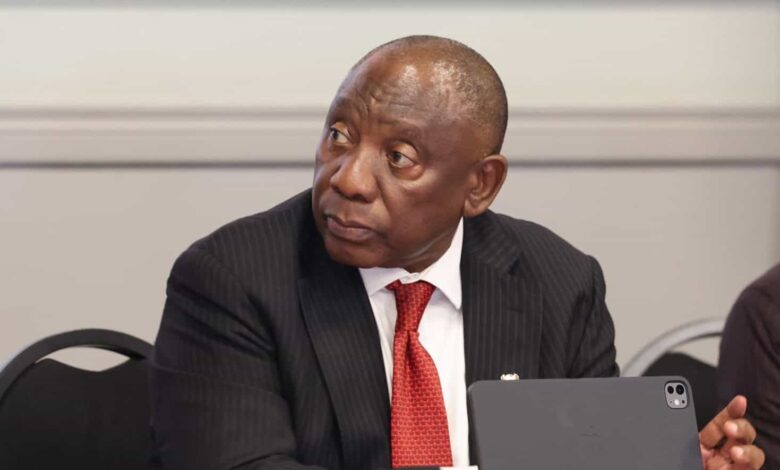

President Cyril Ramaphosa is not attempting to derail Parliament’s impeachment process but is merely asking that it be placed on hold until the courts determine whether the Section 89 independent panel report that triggered the process is legally sound.
This was the central argument advanced by Ramaphosa’s counsel, Advocate Wim Trengove SC, during proceedings before the Western Cape High Court on Wednesday.
Addressing Judge André Le Grange, Trengove said the president’s application was for a limited interim interdict pending the outcome of a review application, which is expected to be heard in early September.
“All the president asks of you today is to give him an interim interdict until this court gives judgment,” Trengove told the court.
ALSO READ| Ramaphosa bids to block impeachment process
The relief sought by Ramaphosa, Le Grange told the court, was temporary and would automatically lapse once the review judgment was delivered.
The Section 89 panel, which investigated claims by former Correctional Services national commissioner Arthur Fraser about a substantial amount of money in US currency which was stolen at Ramaphosa’s Phala Phala farm, found that there was “prima facie evidence” that the president may have committed serious violations of the Constitution.
While Parliament initially resolved to reject the report, the Constitutional Court in May ruled that the National Assembly’s 2022 decision to block an impeachment inquiry into Ramaphosa over the Section 89 panel report was unconstitutional and invalid.
The ConCourt ruling led to the establishment of Parliament’s impeachment committee, which is opposing Ramaphosa’s application to interdict it.
ALSO READ| ATM in push to have Ramaphosa appear before impeachment committee
The MK Party, EFF and ATM were among the political parties also opposing Ramaphosa’s court application.
According to Trengove, the panel misdirected itself by treating “sufficient evidence” as equivalent to establishing a mere prima facie case.
The Constitution, Trengove said, requires a higher threshold before Parliament embarks on an impeachment inquiry.
Impeachment proceedings, Trengove told the court, should never be initiated lightly because of their far-reaching consequences.
While Ramaphosa was willing to be held accountable, Trengrove said subjecting him to the impeachment proceedings was a “humiliation”.
ALSO READ| ConCourt ruling changes how presidents can be impeached
However, Advocate Anton Katz SC representing the ATM told the court that the committee had rules meant to ensure that those who appear before it, including Ramaphosa, were protected.
Ramaphosa, Katz said, was creating the impression that the committee was not governed by rules.
“He is asking the court to interfere in a process that is not unlawful. This is a disturbance of a process that is unfolding,” he said.