International Curiosity Cube science lab lands in Pietermaritzburg
Visiting schools will also tour selected university facilities to gain first-hand insight into higher education and careers in STEM fields.
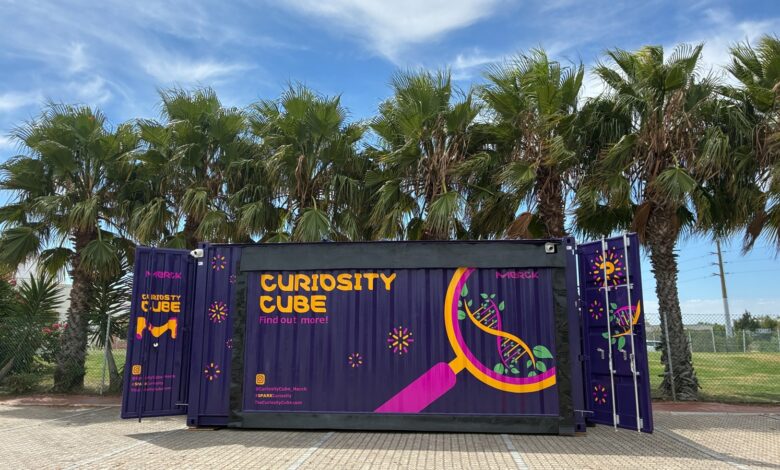

Hundreds of young pupils from across Pietermaritzburg will soon have the opportunity to step inside one of the world’s most innovative mobile science laboratories when the internationally acclaimed Curiosity Cube arrives in KwaZulu-Natal for the first time.
The University of KwaZulu-Natal (UKZN) has partnered with global science and technology company Merck to bring the solar-powered Curiosity Cube to the university’s Pietermaritzburg Campus from July 23 to 29.
ALSO READ | Paralysed KZN woman graduates with master’s in sports science
The mobile laboratory, which forms part of Merck’s global science outreach initiative spanning Africa, Europe and North America, offers free, hands-on science experiences designed to inspire children aged eight to 13 to pursue careers in science, technology, engineering and mathematics (STEM).
Throughout the week, hundreds of primary school pupils are expected to participate in interactive experiments led by Merck scientists and UKZN student volunteers.
Visiting school groups will also tour selected university facilities to gain first-hand insight into higher education and careers in STEM fields.
UKZN Executive Director for Corporate Relations Dr Normah Zondo said the partnership reflects the university’s commitment to nurturing the next generation of scientists and innovators.
By bringing world-class scientific experiences directly to young learners, this initiative provides a unique opportunity for children to interact with real-life scientists and discover the possibilities that STEM careers can offer.
ALSO READ | SA pupils shine at global science competitions in Tunisia and China
This year’s Curiosity Cube programme focuses on synthetic biology, one of the fastest-growing fields in science, which combines biology and engineering to develop solutions to real-world challenges.
Inside the Cube, pupils will take part in three interactive experiments that explore how enzyme shapes influence biological processes through lock-and-key models, how DNA “codes” determine traits and behaviours, and how switching genes on and off enables scientists to engineer solutions to global challenges.
The Curiosity Cube is equipped with modern technology to make science engaging and accessible while promoting sustainable practices through its solar-powered design.
It is also fully wheelchair accessible, reflecting Merck’s commitment to making STEM education inclusive.
The programme is part of Merck’s broader sustainability and social business innovation strategy, which aims to expand access to quality science education in communities where the company operates.
ALSO READ | KZN pupils shine at global science symposium in India
Local Merck employees and partners volunteer as mentors, allowing pupils to meet real-life scientists and learn about careers in STEM.
Members of the public will also have the opportunity to experience the Curiosity Cube during a free Open Day on Saturday from 10 am to 3 pm at UKZN’s Agricultural Campus on Carbis Road in Scottsville.
Families and aspiring young scientists are encouraged to visit the Cube and take part in the interactive activities. Participation in all Curiosity Cube experiences is free of charge.