DUT becomes first African university to host global AI symposium
The initiative has the potential to transform language technology while preserving the world's rich cultural and linguistic heritage, he said.
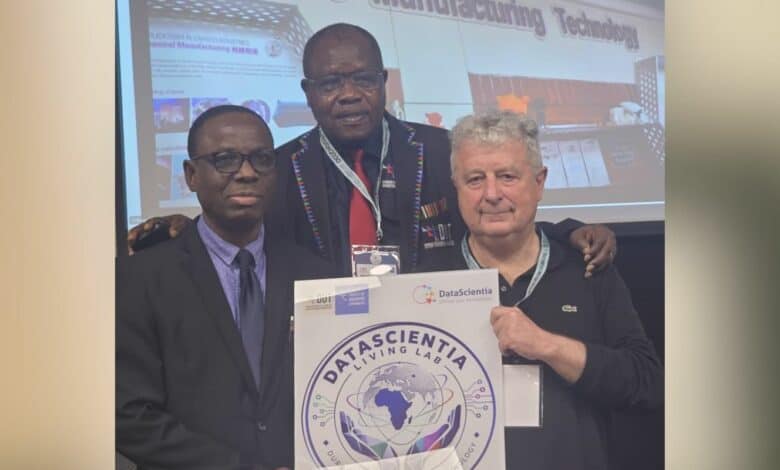

The Durban University of Technology (DUT) has made history by becoming the first institution on the African continent to host the 2026 DataScientia International Symposium, marking a major milestone for the global initiative after a decade of being held in Europe.
Speaking at the opening of the three-day symposium, DUT’s Executive Dean of the Faculty of Accounting and Informatics, Professor Oludayo Olugbara, described the event as a watershed moment for Africa, saying it represented a significant step towards advancing ethical, human-centred artificial intelligence on the continent.
Held under the theme “Diversity-Aware Sovereign AI,” the symposium has attracted more than 200 delegates from over 50 institutions across Europe, Africa, Asia, the Middle East and South America, including leading academics, policymakers, industry experts and representatives of international organisations.
ALSO READ | DUT footballer secures dream move to TS Galaxy FC
The 2026 event marks a watershed moment because of the launch of the first DataScientia Living Lab in Africa.
“This lab will serve as an open-innovation ecosystem where research, business, government and citizens across Africa collaborate to co-create, prototype and validate products or services that improve human life,” he said.
He said the DataScientia initiative seeks to build a global citizen science community of practice dedicated to person-centred general artificial intelligence.
“Rather than treating individuals as passive data sources, the initiative focuses on empowering people with the tools and technologies to understand, manage and use their own data,” he said.
He highlighted one of the initiative’s flagship global research projects, which aims to digitise more than 7,000 human languages and develop AI-powered language technologies that allow people to communicate in their indigenous languages.
The initiative has the potential to transform language technology while preserving the world’s rich cultural and linguistic heritage, he said.
“This novel project will lead to a breakthrough in web-of-languages innovation, helping to realise the digital preservation of people’s cultural and linguistic heritage,” he said.
He added that hosting the symposium in South Africa demonstrates the growing importance of Sovereign AI, an approach to artificial intelligence that respects cultural diversity, local knowledge, and regional autonomy over data and AI models.
ALSO READ | On-duty Midlands EMS crew injured in serious Howick crash
He said there is currently a low representation of African institutions in the DataScientia partnership network project initiatives, adding that the decision to host the event in Africa this year was to attract more partnerships from African institutions in pursuit of DataScientia mission to achive AI sovereignty in the continent.
The symposium is organised by the global DataScientia Initiative, an international collaboration promoting ethical AI, responsible data governance and citizen science.
The programme for the event includes two days of symposium sessions and dialogue on Diversity-Aware Sovereign AI, followed by workshops and tutorials focused on the DataScientia initiative and the development of lexicon datasets for language modelling.