Japan to test rare-earth mining 6 km underwater
Japan and the United States, as well as many other countries, are seeking to curb dependence on China for the valuable minerals.
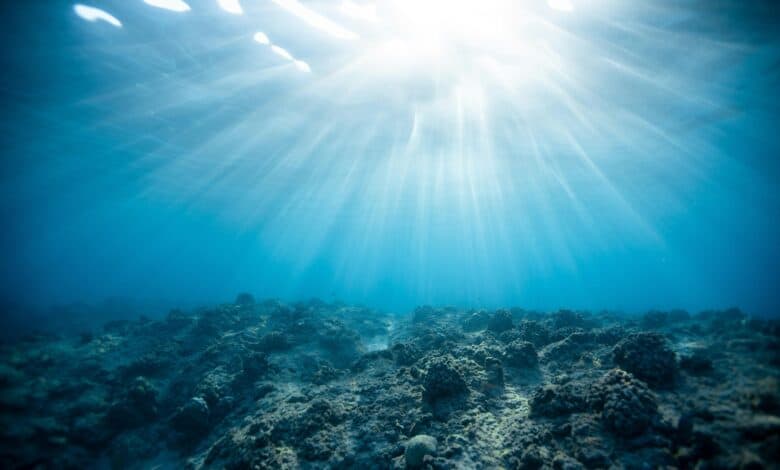

Japan said Friday it plans to conduct full-scale mining tests in February for rare earth minerals from a seabed near a remote Pacific island, after a mission successfully recovered samples from six kilometres below the waves.
Japan and the United States, as well as many other countries, are seeking to curb dependence on China for the valuable minerals used in an array of high-tech products from missiles to wind turbines.
ALSO READ | Two arrested as Operation Prosper targets illegal mining
Prime Minister Sanae Takaichi said that the samples taken earlier this year by a deep-sea drilling ship from a depth of around 6,000 metres near Minami Torishima included traces of yttrium.
Yttrium “is globally scarce and is used in coating agents for semiconductor manufacturing equipment, catalysts for purifying harmful nitrogen oxides in exhaust gases, and in the semiconductor and automotive industries, making it an important rare earth for our country”, Takaichi said on X.
“Based on this achievement, we plan to conduct a full-scale mining test in February next year.”
Japan will “undertake efforts to strengthen the supply chain resilience, with the full involvement of both government and private sectors, so as not to overly depend on specific countries”, Takaichi added.
The Japan Agency for Marine-Earth Science and Technology (JAMSTEC) said separately that gadolinium and dysprosium, two other rare-earth elements, were also detected in the 50 tonnes of seabed material recovered.
ALSO READ | SA’s R890bn investment surge led by energy, mining and tourism
In March, Takaichi said that she would discuss cooperation with the United States on mining around the coral atoll, which is some 2,000 kilometres (1,250 miles) from Tokyo and also known as Minamitorishima.
Previous studies have suggested that the surrounding seabed could contain millions of tonnes of rare earths which might ensure supplies of some minerals for many hundreds of years.
Environmental campaigners warn deep-sea mining threatens marine ecosystems.
China accounts for almost two-thirds of rare earth mining production and 92 percent of global refined output, according to the International Energy Agency.
A spat with Beijing sparked by comments by Takaichi about Taiwan in November has seen China heavily restrict supplies to Japan.
ALSO READ | Beetles block mining of Europe’s biggest rare earths deposit
Officials said in March that they also planned to conduct a preliminary survey on Minami Torishima, uninhabited by civilians and off-limits to tourists, as a possible site for nuclear waste.