Archaeologists edge closer to unlocking Waterberg’s hidden history
Previous excavations by the same team uncovered evidence that Iron Age farmers and Later Stone Age hunter-gatherers used the area more than 1 500 years ago.
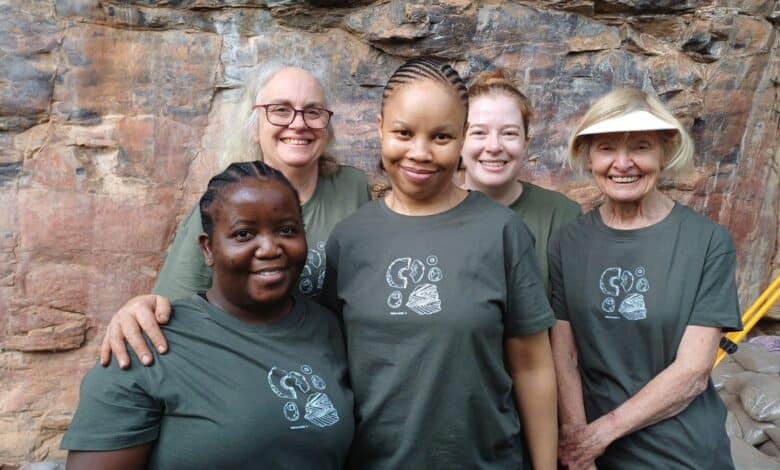

Archaeologists, including members of the KwaZulu-Natal Museum, have returned to the remote Dwaalhoek excavation site in Limpopo’s Waterberg region and expanded the excavation area by opening new squares at the shelter.
Returning to an excavation is always exciting. When excavating we have ideas of what we may find based on what can be seen on the surface and along the dripline but it is always a process of discovery with possibilities of the unexpected.
“Curiosity is something that drives us,” said KwaZulu-Natal Museum archaeologist Dr Ghilraen Laue.
ALSO READ | Short history of archaeology in South Africa
For her, the most prominent emotion was one of joy and expressed feeling privileged to be able to do something she was passionate about.
“To be in the wilderness with great colleagues making exciting new discoveries makes me really happy,” she said.
She said the team’s focus this season was to expand the excavation area by opening new squares at the shelter.
This meant, Laue explained, that unlike the first excavation, they had a better idea of what they would find.
The KZN Museum team is among researchers from the University of Johannesburg and University of South Africa, and the University of the Witwatersrand led by Professor Lyn Wadley from Wits’ Evolutionary Studies Institute (ESI).
ALSO READ | Rocks of ages
Their excavation is located within Kaingo Game Reserve.
Laue stressed that there was always a possibility of finding something never seen before.
Dwaalhoek has become one of the most intriguing archaeological sites in the Waterberg.
Previous excavations by the same team uncovered evidence that Iron Age farmers and Later Stone Age hunter-gatherers used the area more than 1 500 years ago.
The site first caught the attention of Laue and Wadley because of its rock art and visible archaeological deposits.
The shelter contains white finger-painted initiation art linked to Iron Age farmers, while a nearby alcove features faded San hunter-gatherer imagery associated with spiritual beliefs and rituals.
The group believe the site may contain deep archaeological layers stretching far back into prehistory.
“The Dwaalhoek site shows evidence of being very deep, but so far we have only got through the upper layers which point to use of the shelter by Iron Age farmers,” said Laue.
ALSO READ | ‘Real hands-on history’ on TV
We surmise that as we dig further down, we will find evidence of Later and Middle Stone Age use of the shelter.
The broader Waterberg project aims to better understand when and how people occupied the region over hundreds of thousands of years.
Earlier excavations a part of the project led by Wadley elsewhere in the Waterberg revealed evidence of Homo erectus living in the area between one million and 780 000 years ago, while other sites have shown Middle Stone Age occupation dating back about 110 000 years.
However, archaeologists are still trying to understand a puzzling gap in the occupation record before Later Stone Age communities appeared around 2 000 years ago.
The team is made up of Laue, who represents the Rock art and Later Stone Age view, Dr Bongekile Zwane who is an Anthracologist (specialist who looks into archaeological charcoal), Dr Rosa Moll who specialises in Early Stone Age and stone tool production, Wim Biemond for Iron Age and Dimakatso Tlhoaele: Iron Age and Later Stone Age.
As the project progresses, other specialists such as a faunal specialist to look at the bone remains might be brought on board.
ALSO READ | Unpacking the Iron Age
Beyond the discoveries themselves, the researchers described the experience of working in the reserve as unforgettable, with daily encounters with giraffe, antelope, elephants and rhino adding to the sense of adventure surrounding the excavation.