WATCH | Immigration tensions pose long-term threat to economy, experts warn
Despite the relative calm, Ntuli acknowledged that some individuals had used the protests as cover for criminal activity.
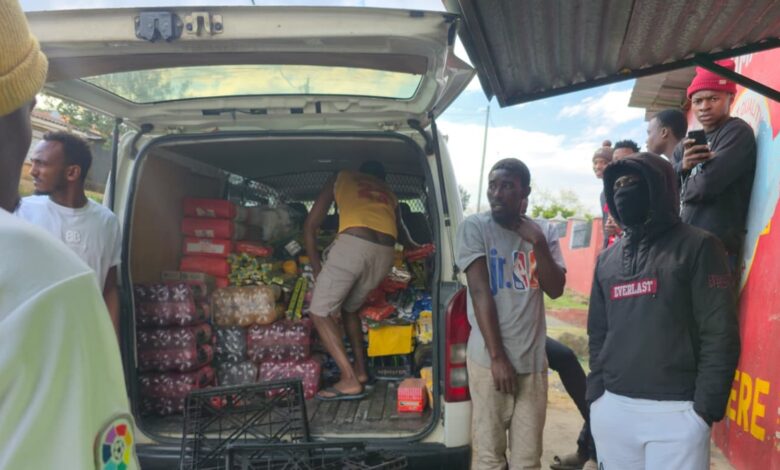

Growing tensions around illegal immigration could pose a serious long-term threat to South Africa’s economy if left unresolved, economists have warned, saying prolonged instability could undermine investor confidence, job creation and economic growth.
Professor Iraj Abedian, founder and chief economist at Pan-African Investment and Research Services, warned that persistent tensions around immigration could damage South Africa’s image as a stable investment destination and weaken prospects for economic growth.
ALSO READ | Migrants refuse to depart without their furry companions
It will create an image of an economy vulnerable to immigration tensions.
“This can be harmful to the building of an economy which creates jobs,” he said.
Azar Jammine, director and chief economist at Econometrix, said government needed to demonstrate that it had the capacity to manage South Africa’s borders effectively and ensure that migration into the country took place lawfully.
Going forward, he said, the state must show it can manage the country’s borders “and ensure that people enter the country legally”.
Despite these longer-term concerns, the immediate economic impact of the June 30 anti-illegal immigration protests organised by the March and March Movement appears to have been limited, with financial markets and business activity largely absorbing the disruption.
Abedian said the protests had so far not dented South Africa’s image as an investment destination, citing the stability of the rand and the performance of the JSE.
ALSO READ | Tensions flare as residents clash over foreign-owned shops
“Short-term, there has not been any impact on the economy,” he said.
Ahead of the June 30 protests, there had been widespread fears that demonstrations would result in large-scale looting, vandalism and major disruption to business activity, particularly in KwaZulu-Natal.
However, briefing the media in Durban on Thursday, KwaZulu-Natal Premier Thami Ntuli said security measures put in place by government, coupled with residents rejecting violence, resulted in minimal disruption to businesses.
“The province-wide protests and demonstrations vehemently tested our capacity to lead, and we emerged triumphant,” he said.
Ntuli commended residents for exercising their democratic right to protest responsibly and said law enforcement agencies had played a major role in ensuring order in the province.
The people of KwaZulu-Natal allowed democracy to prevail.
“We also commend the police and other law enforcement agencies for working with determination and diligence to prevent anarchy and chaos,” he said.
ALSO READ | Zimbabweans plead for protection at PMB camp
Despite the relative calm, Ntuli acknowledged that some individuals had used the protests as cover for criminal activity.
“We commend police for arresting 51 people implicated in looting and vandalism. This sent a stern warning to lawbreakers that they do not have a place in KwaZulu-Natal,” Ntuli said.
With thousands of undocumented foreign nationals having left the province in recent days, Ntuli said the provincial government’s focus would now shift towards ensuring South Africans participate more meaningfully in township and local economies, particularly sectors where informal trade is heavily dominated by foreign nationals.
“To address the pertinent issues pertaining to unemployment, in due course, I will convene a roundtable discussion on local economic development in the context of spaza shops,” he said.
His remarks come amid growing debate over township economies, where informal retail has become both an important source of livelihoods and a flashpoint for tensions around illegal immigration, unemployment and local economic exclusion.
ALSO READ | Local businesses see surge in trade after foreign-owned shops close
However, while organisers say their campaign is aimed at illegal immigration, concern is mounting that some protesters are increasingly targeting small traders who may be legally documented and operating lawfully in South Africa.
This has become evident in Pietermaritzburg’s townships, where foreign national spaza shop owners have begun exiting their businesses.
In Ashdown, foreign spaza shop owners yesterday began shutting their doors as local business owners intensified their campaign to prevent foreign nationals from operating businesses in the area.
At one Pakistani-owned spaza shop, workers were seen packing stock into boxes while preparing to vacate the premises as members of the Ashdown business community continued their campaign targeting foreign-owned businesses.
The campaign follows a meeting held earlier this week where local business owners resolved to pressure foreign nationals to close their shops, arguing that the presence of foreign-owned businesses had made it difficult for local traders to thrive.
Organisers say they intend engaging landlords as part of the campaign to prevent foreign national-owned spaza shops from operating in the area.
ALSO READ | PMB volunteers distribute 55 000 sandwiches to migrants awaiting repatriation
Thursday’s operation also saw groups of business people moving from shop to shop and urging foreign-owned businesses to cease trading.