Hormuz ship crossings spike after war deal
The spike came after Iran and the United States agreed to reopen the crucial route under an agreement to end the war.
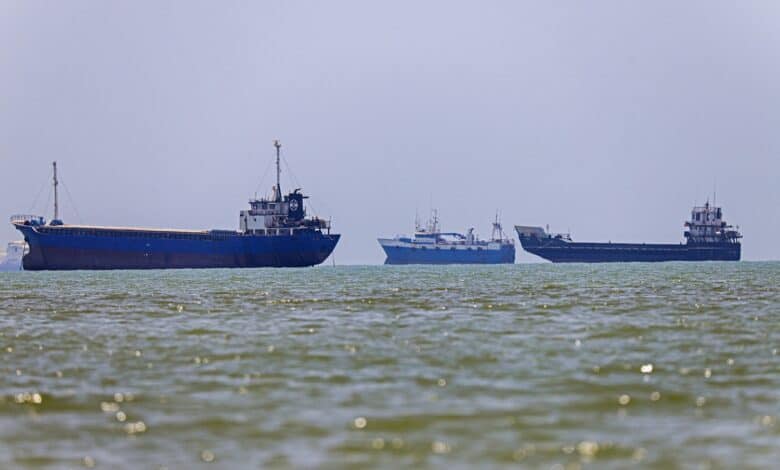

A total of 25 commercial vessels crossed the newly-reopened Strait of Hormuz on Thursday, the highest number since mid-April, according to data from maritime tracking firm AXSMarine published on Friday.
The spike came after Iran and the United States agreed to reopen the crucial route under an agreement to end the war, but before the cancellation of talks between the sides in Switzerland that had been planned under that deal.
ALSO READ | WATCH | Oil prices sink further as Trump signs deal to reopen Hormuz
On Thursday “we observed 25 verified commercial vessel crossings through the Strait of Hormuz — the highest single-day count since 18 April and more than five times the average daily level recorded during the first ten days of June,” AXSMarine said in a news release.
Iranian forces effectively closed off the strait after US and Israeli strikes sparked the war on February 28. Maritime authorities reported dozens of attacks on ships in the area.
Iran later briefly reopened the global trade artery to commercial traffic, prompting a short spike in crossings on April 18.
Before the war, about 120 vessels a day had passed through the strait, according to leading shipping journal Lloyd’s List.
A fifth of the world’s oil and liquefied natural gas exports passed through the strait in peacetime, according to economists.
ALSO READ | Trump says US-Iran deal to be signed Sunday, Hormuz to open after
AXSMarine said crossings averaged 7.6 a day from the start of March.
The number of crossings on Thursday may be higher, as some ships turn off or manipulate their AIS transponder signals to avoid detection while passing through the strait.
Thursday’s “spike came amid the largest AIS signal disruption event we have observed in the Persian Gulf since the conflict began, with more than 200 commercial vessels affected simultaneously by spoofing or abnormal AIS behaviour,” it said.
Safe shipping plans
Shipping groups warned this week that plans for the resumption of traffic were still not clear and it was not thought safe to start exiting the Gulf through the strait.
Jakob Larsen, chief security officer at leading shipping lobby BIMCO, said however that the body “expects an international coordination body to be established shortly to facilitate transits”.
ALSO READ | Tehran says no final decision as Trump touts imminent deal
The International Maritime Organization’s chief Arsenio Dominguez said in April that the body was working on a plan to ensure safe transit for ships stuck in the Gulf by the conflict.
More than 500 commercial vessels are still stuck in the Gulf, with about 11,000 seafarers on board, according to the IMO. It says 20,000 seafarers in the region have been affected by the war overall.