Deputy Minister Singh rejects “environment vs economy” debate
Singh said the health of rivers, ocenas, forests and protected areas is directly linked to water security, agriculture, tourism, and jobs.
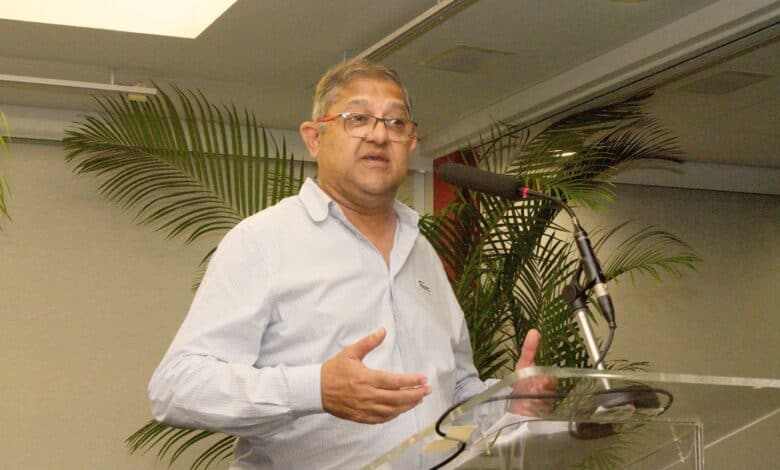

South Africans must move beyond the idea that environmental protection and economic growth are competing priorities, Deputy Minister of Forestry, Fisheries and the Environment Narend Singh said.
Rather, both are essential to the country’s future prosperity.
ALSO READ | DUT professor ranked third-best environmental scientist in SA
Singh said the health of rivers, wetlands, oceans, forests and protected areas is directly linked to water security, agriculture, tourism, jobs and climate resilience.
“These natural systems provide water, support agriculture, sustain tourism, create jobs and protect communities from the growing impacts of climate change,” Singh said.
When they are degraded, the consequences are felt not only by conservationists, but by ordinary citizens through water shortages, lost livelihoods, rising food insecurity and increased vulnerability to floods, droughts and extreme weather events.
He said environmental protection should not be treated as a “luxury or afterthought”, but as a core investment in South Africa’s economic and social future.
Singh acknowledged that conservation institutions are under strain due to financial pressures, ageing infrastructure, staffing shortages and rising operational costs, with rangers and officials often working in difficult conditions while dealing with wildlife crime and climate impacts.
ALSO READ | Broken bottles in Ferncliffe Reserve raise environmental alarm
These challenges, he said, require urgent intervention, including a focused assessment of protected areas to improve governance, strengthen management and address weaknesses in the system.
At the same time, he stressed that conservation must also deliver benefits to communities living near protected areas.
“Communities living alongside protected areas must see tangible benefits from conservation efforts. Environmental protection must create opportunities, support livelihoods and contribute to local development,” he said.
Singh pointed to the biodiversity economy as a key growth area, saying the government aims to unlock job opportunities through the revised Biodiversity Economy Strategy, particularly for young people, women, rural communities and persons with disabilities.
He said existing environmental programmes such as Working for Water, Working for Wetlands, Working on Fire and Working for Coast already demonstrate how ecological restoration can be combined with job creation.
ALSO READ | Emalahleni Local Municipality fined R650m for water and environmental pollution
“These initiatives show that environmental investment is not a cost to society; it is an investment that delivers social, economic and ecological returns,” Singh said.
He also warned that climate change is already having a direct impact on South Africa through droughts, floods, wildfires and water stress, describing it as a “present reality” rather than a future threat.
Singh said the implementation of the Climate Change Act marks a key step in strengthening South Africa’s response, but added that developing countries require greater access to climate finance.
“Climate finance should never be viewed as charity. It is an instrument of global justice and shared responsibility,” he said.
He further called for stronger enforcement of environmental laws, saying communities have a right to clean air, safe water and healthy ecosystems, and that those who breach environmental regulations must be held accountable.
ALSO READ | Environmental groups weigh in on Bisley medical waste dumping
Singh said environmental crimes are becoming more complex and transnational, requiring continued investment in enforcement capacity and cooperation between agencies.
Ultimately, he said, environmental spending must translate into tangible outcomes.
“The choices we make today will shape the South Africa inherited by future generations,” Singh said.
“Our environment is not a barrier to development. It is one of our greatest national assets.”