WATCH | Google bets on South Africa with new AI and cloud investments
The project builds on Google’s existing cloud region in the country and broader infrastructure investments across the continent.
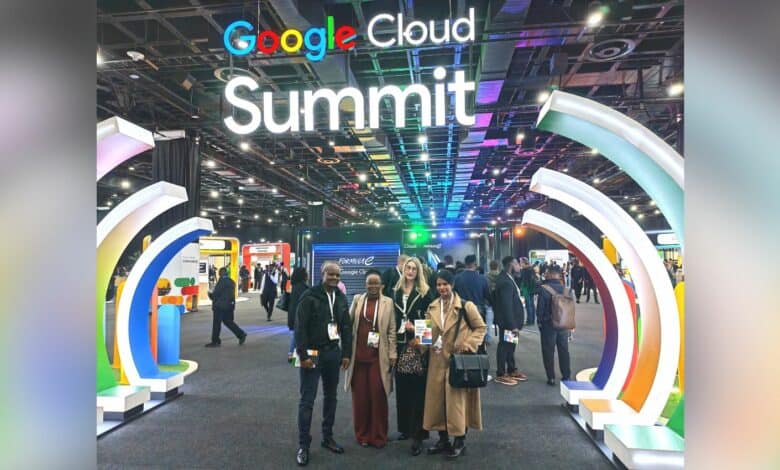

Google used its Cloud Summit in Sandton on Wednesday to announce a series of major partnerships across infrastructure, education, healthcare and startups, aimed at accelerating artificial intelligence adoption across South Africa and the African continent.
The summit, attended by business leaders, government representatives, startups and media partners, including The Witness, opened with a keynote address from President Cyril Ramaphosa, who emphasised the importance of collaboration between the public sector and global technology companies such as Google to drive South Africa’s next phase of digital economic growth.
Speaking at the event, Google’s Senior Vice President and Chief Research, Technology and Society Officer, James Manyika, said AI is reshaping global industries at speed and represents a significant opportunity for Africa.
ALSO READ | What is emotional flooding? Unpacking the term that has doubled in Google search interest in 2026
“We’re seeing AI adoption accelerate at an extraordinary pace,” Manyika said, pointing to rapid growth in AI usage across Google’s systems.
A central theme of the summit was how co-ordinated partnerships can ensure Africa moves from AI adoption to AI creation, with Google outlining new investments designed to strengthen infrastructure, skills and trusted digital ecosystems.
A major infrastructure announcement was the South Africa Digital Exchange Point in the Eastern Cape, designed to strengthen cloud connectivity, expand local compute capacity and improve enterprise access to advanced AI systems. The hub will connect into Google’s global subsea cable networks, including links to Australia, positioning South Africa as a stronger regional digital gateway for cloud and AI services.
The project builds on Google’s existing cloud region in the country and broader infrastructure investments across the continent.
Alongside this, Google announced an Applied AI Lab aimed at accelerating Africa’s startup ecosystem.
The initiative brings together Google Research, the AI Futures Fund and venture capital partners to support the creation of AI-native companies built in Africa for global markets.
It extends Google’s startup support programme, which has helped scale more than 320 startups across 17 African countries since 2018, and opens applications for the 2026 South African Startup Cohort, offering equity-free funding, mentorship and technical training.
ALSO READ | Google Doodle celebrates Winter Olympics
Education and workforce development formed another key pillar of the announcements. Google confirmed one year of free access to advanced AI tools for more than one million university students across Ghana, Kenya, Nigeria, Rwanda, South Africa and Zimbabwe.
It is also working with the African Union to roll out Gemini for Education across all 55 member states, integrating AI tools into higher education systems continent-wide.
Locally, Google is investing in a R3 million Digital Innovation Centre in Soweto in partnership with WeThinkCode, aimed at expanding access to practical digital and AI skills training.
As AI becomes central to information access, Google highlighted partnerships with news organisations, including The Witness, to strengthen trusted content ecosystems.
These collaborations aim to ensure high-quality journalism underpins AI systems and search technologies by prioritising verified sources, improving attribution in AI outputs and reducing misinformation risks.
Marianne Erasmus, Google News Partnerships Lead for Middle East and Africa, said trusted journalism is essential to responsible AI development as generative tools become more widely used.
ALSO READ | South Africa and Google Cloud forge partnership to drive Africa’s digital future
In healthcare, Google highlighted its partnership with Discovery, which is using Google Cloud and Gemini models to build personalised preventive healthcare systems through its Vitality platform.
Discovery CEO Adrian Gore said AI enables a shift from reactive to proactive healthcare at scale, with potential to improve outcomes for millions.
In Zambia, AI-assisted tuberculosis screening is improving chest X-ray diagnostics, while South African company Nexus AI has processed more than 25,000 medical scans across multiple countries.
Manyika concluded by urging collaboration to ensure Africa is not left behind in the global AI transition: “We should not let the digital divide become an AI divide.”