PICS | ‘Quite special’: EWT documents rare hybrid crane chick
Genetic samples were collected, and the bird was ringed in March to allow researchers to track it into adulthood.
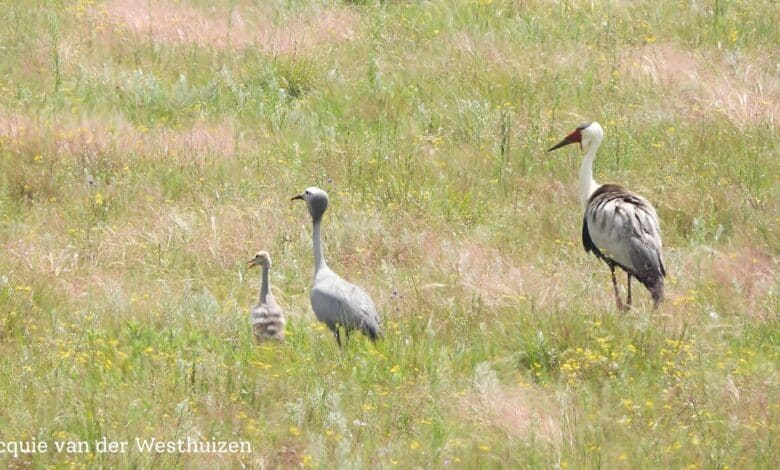

Conservationists have documented an exceptionally rare hybrid crane chick after a Wattled crane paired with a Blue crane, and are currently raising a male offspring, spotted on a farm in Mpumalanga.
The unusual pairing was first reported to the Endangered Wildlife Trust (EWT) by the observant farmer who had been monitoring the cranes’ activity.
ALSO READ | Rescued grey-crowned crane chicks find safety at FreeMe Wildlife
EWT senior field officer Jacquie van der Westhuizen said seeing the hybrid was a first in her six years with the organisation.
“It was absolutely amazing. It is very rare to see this happen. To experience it was quite special,” she said.
The farmer initially alerted the EWT to a lone Wattled crane that had been associating with Blue cranes for several years and , in February, reported seeing the pair with a chick.
“At first, it was thought that it was an Egyptian goose following the pair around, until the farmer identified it as a chick,” she said.
Van der Westhuizen said the team first monitored the birds through binoculars and cameras before traversing the farmer’s land to observe the trio from as close as 100 metres.
ALSO READ | Blue crane numbers plummet as status shifts to vulnerable
The chick was estimated to be about five weeks old when first observed and has since fledged.
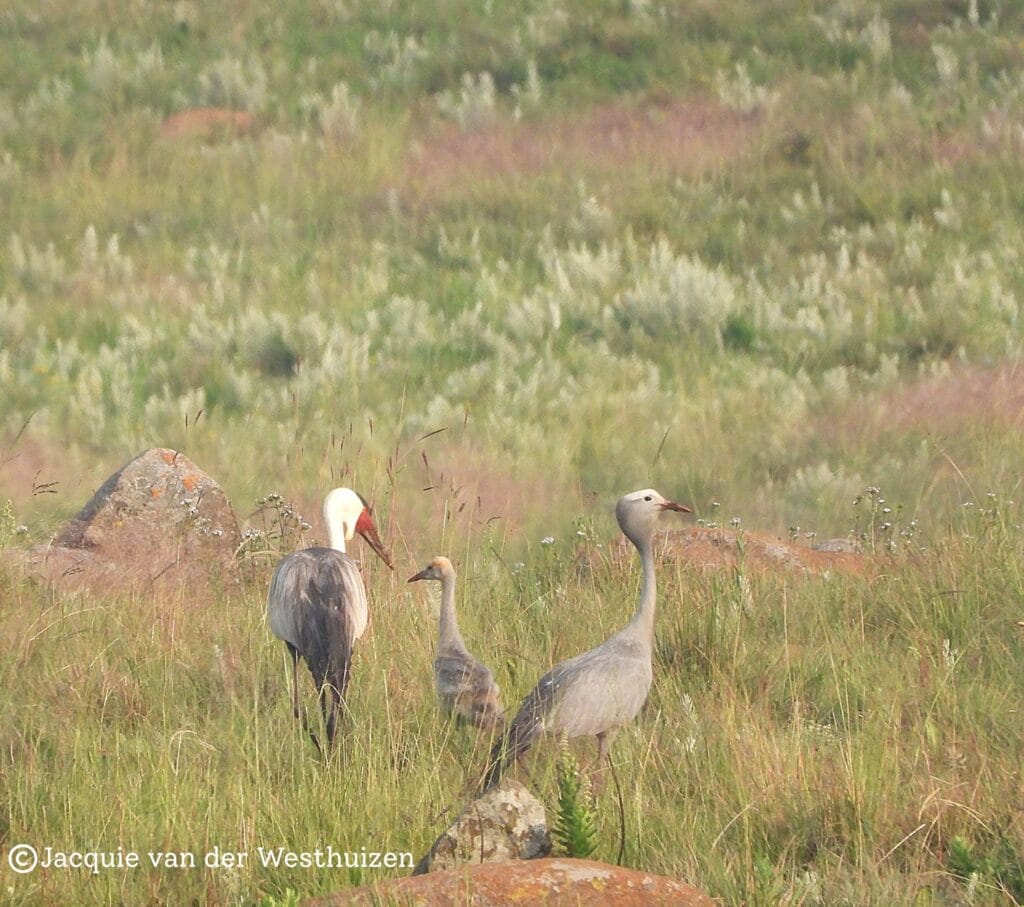
Genetic samples were collected, and the bird was ringed in March to allow researchers to track it into adulthood.
“There are not many cases that have been reported or documented. A Blue and Wattled crane are not supposed to pair,” said Van der Westhuizen.
EWT are particularly interested in whether the hybrid will be fertile when it reaches adulthood.
“In the animal kingdom, hybridised species are generally infertile,” she said.
However, she pointed out that there can be exceptions and that the blue crane-wattled crane offspring would be monitored to see if it was fertile.
Van der Westhuizen added that a professor studying cranes in Australia had come across the offspring of a Brolga and a Sarus crane that had produced offspring that were fertile.
At an estimated six months old, Van der Westhuizen said the fledgling has the features of both parents.
When I first saw the chick, it looked like a wattle crane, but in March, it looked like a Blue crane chick. In recent pictures, it’s the size of a Wattle crane chick with the head of a blue crane. It’s quite strange.
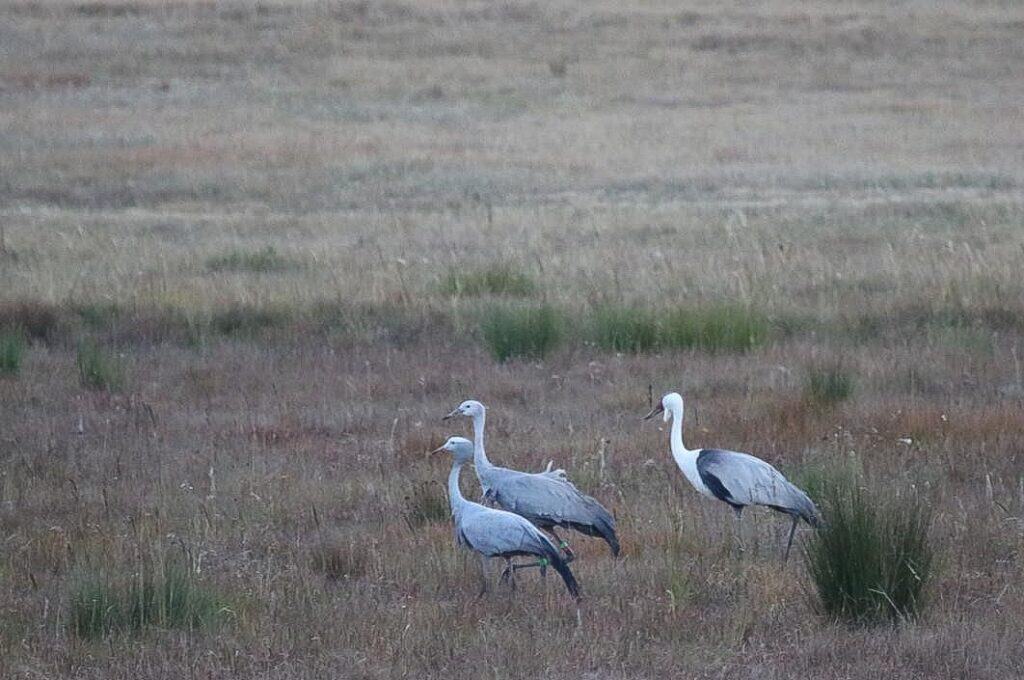
The discovery comes amid concern over declining Wattled crane numbers in Mpumalanga.
Once home to the second-largest population outside KwaZulu-Natal, the province now has only four known breeding pairs.
ALSO READ | Our Viewpoint | Blue cranes
Van der Westhuizen said habitat loss, mining activity and changes in wetland management may have contributed to the decline.
“One of the reasons these types of hybridisations happen could be as a result of habitat loss, which in turn results in the decline of cranes in certain areas,” she said.
The EWT and the International Crane Foundation are continuing research into the species’ decline while monitoring the young hybrid’s development.