WATCH | Small businesses pin hopes on immigration crackdown to unlock local opportunities
Many local operators say they have spent years battling what they believe is unfair competition from undocumented migrants
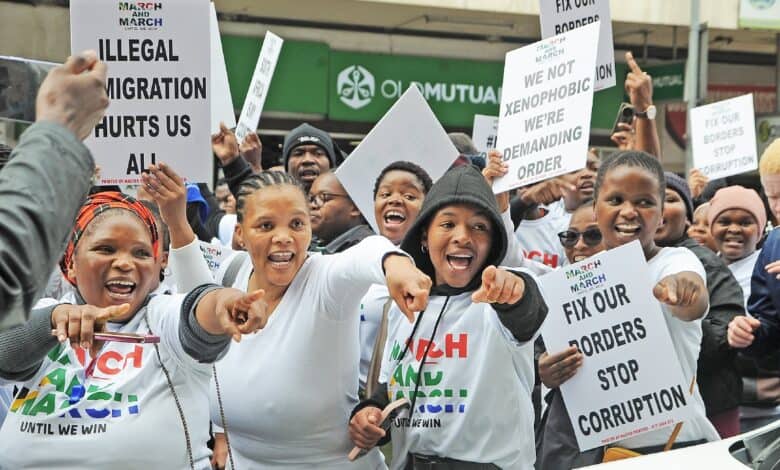

As South Africa intensifies its crackdown on undocumented immigration, small business owners in Pietermaritzburg say they are hopeful that stricter enforcement could create long-awaited opportunities for local entrepreneurs and job seekers operating in the city’s fragile micro economy.
From tuckshops and takeaways to salons, construction and informal trading, many local operators say they have spent years battling what they believe is unfair competition from undocumented migrants working outside regulatory frameworks.
Their optimism comes as government ramps up enforcement on multiple fronts, including tougher border controls, increased deportations, workplace inspections and proposed penalties for employers found hiring undocumented workers.
The renewed focus comes as the widely publicised June 30 deadline set by anti-immigration groups calling for undocumented foreign nationals to leave South Africa.
ALSO READ | Law-abiding immigrants caught in growing anti-foreigner anger
Last week, The Witness reported that more than 9 416 people had registered at the Mayor’s Walk venue, including 4 522 men, 3 450 women and 1 444 children, with verification processes still under way.
For many local entrepreneurs, the issue is less about politics and more about economic survival.
Hope Dlamini, owner of Hope’s Kitchen in Church Street, said small South African businesses often struggle to compete against traders who can operate at significantly lower costs.
“I used to sell fried chips, but I eventually stopped because I was charging R20 while the shop next door, owned by a foreign national, sold the same product for R10. Naturally, customers chose the cheaper option, making it impossible for me to continue,” she said.
Dlamini said compliant South African businesses carry costs that some illegal operators allegedly avoid.
Our businesses are registered and comply with health and trading regulations. We pay taxes and other operating costs.
“Those who operate illegally do not always follow these rules, making it difficult for us to compete fairly,” she said.
Her concerns are echoed across several sectors of Pietermaritzburg’s informal and small business economy, where margins are thin and competition is intense.
Mafiki Mthembu, owner of Mafiki Beauty Bar, said enforcement could help create space for compliant local businesses to expand.
“Our businesses are registered and we employ more than 100 people. If undocumented foreigners operating illegally are removed, we believe it will create room for local businesses to expand and employ even more South Africans,” she said.
Mthembu said immigration enforcement alone would not solve deeper economic challenges. “Government needs to come back to the drawing board and assist small businesses with funding and other support so that we can grow and contribute more to the economy,” she said.
ALSO READ | Over 100 000 illegal immigrants deported from SA
That call for enforcement to be matched by economic support is increasingly being echoed by business owners who say compliance must be paired with opportunity.
Young unemployed residents also see potential openings in sectors long dominated by migrant labour, particularly construction, plumbing, retail and personal services.
Sinenhlanhla Zimu (26), from Sweetwaters, said unemployment remains the biggest concern. “This country has limited resources and they are not even enough for its own people. I believe the influx of undocumented foreigners places additional pressure on employment and business opportunities,” she said.
Nompumelelo Ngcamu (29), from Hopewell, said the current operation must not end with deportations.
“I want government to ensure that, after the repatriation process, our borders are properly secured,” she said.
We also need stronger action against people who operate illegally and sell illicit goods that put consumers’ health at risk.
Government appears to be moving towards exactly that.
President Cyril Ramaphosa told the National Council of Provinces this week that government would intensify deportations of undocumented immigrants, recruit more labour inspectors and introduce employment quotas for foreign nationals as part of broader immigration reforms.
At the same time, the Department of Employment and Labour has launched one of the largest workplace enforcement drives since the dawn of democracy.
The department’s recruitment of 10000 permanent labour inspectors is now operational across all provinces, dramatically expanding its capacity to detect labour law violations, undocumented workers and workplace non-compliance.
This increases the inspection force from roughly 2 300 inspectors to a far larger compliance network capable of conducting unannounced inspections across multiple sectors.
ALSO READ | KZN government will clamp down on illegal immigrants — Premier Ntuli
Labour-intensive industries such as agriculture, logistics, manufacturing, hospitality and warehousing are expected to face the most scrutiny.
Deputy director-general Sam Morotoba said multidisciplinary inspection teams are already carrying out surprise visits alongside other government agencies.
The crackdown is also expected to place greater pressure on employers who rely on undocumented labour to reduce costs.
Under the proposed framework, employers could face fines of up to R100000 per undocumented worker for a first offence, while repeat offenders could face penalties linked to company profits.
Donné Nieman, sales director at Workforce Staffing, said many businesses still underestimate the scale of the enforcement drive. “The enforcement landscape has permanently shifted from the policy room to the field,” said Nieman.
ALSO READ | Police arrest business owners for employing illegal immigrants
She warned that inspectors are no longer simply checking whether employers hold copies of identity documents, but are increasingly verifying the authenticity and validity of passports, asylum permits and work visas against government databases. “The responsibility to ensure authenticity falls entirely on the employer,” she said.
For many in Pietermaritzburg’s micro economy, the tougher stance signals a possible turning point.
Local business owners say removing illegal operators could help restore fair competition, but they also caution that enforcement alone will not create sustainable economic growth.
Without better access to funding, business development support, skills training and market opportunities, they warn that the space created by enforcement may remain difficult for South Africans to fill.
Still, among many local traders there is cautious optimism that, if properly implemented, the crackdown could mark the beginning of a more balanced trading environment — one where compliance is rewarded and small businesses have a fairer chance to survive, grow and employ more South Africans.