EWT revives nationwide crane census, urges citizen participation
The conservation initiative, which last ran annually between 1998 and 2006, is being revived using WhatsApp reporting, making it easier.

WhatsApp has come to the rescue of South Africa’s three crane species following a 20-year pause in the National Crane Census, but technology cannot do it all. Humans are still needed.
So, the Endangered Wildlife Trust (EWT), in partnership with the International Crane Foundation (ICF), is calling on ordinary South Africans to become citizen scientists.
ALSO READ | PICS | ‘Quite special’: EWT documents rare hybrid crane chick
“The National Crane Census demonstrated the power of public participation in conservation,” said Dr Lara Fuller, Drakensberg Project Manager for the African Crane Conservation Programme.
It is vital that we verify whether observed increases and declines in crane populations are accurate.
The project forms part of a 30-year conservation partnership between the EWT, ICF, Ezemvelo KwaZulu-Natal Wildlife, the KwaZulu-Natal Crane Foundation and Eskom, which has contributed significantly to crane conservation across South Africa.
Crane conservation in South Africa relies heavily on information submitted by landowners and members of the public to monitor the numbers and distribution of the country’s three crane species.
According to the EWT, the success of the census depends on ordinary South Africans acting as citizen scientists.
ALSO READ | Rescued grey-crowned crane chicks find safety at FreeMe Wildlife
Because information about the distribution of South Africa’s crane species is limited, we are calling on all South Africans to assist us in this important citizen science initiative from July 24 to July 27.
Participants are asked to submit the number of cranes spotted, the species observed and the location where they were seen using WhatsApp.
All information collected, including participants’ contact details, will remain confidential, and the survey findings will be shared once the data has been analysed.
Each of South Africa’s three crane species faces different conservation challenges, making public sightings increasingly valuable.
The Wattled Crane, which was downlisted from Critically Endangered to Endangered in 2025, now has an estimated population of about 288 birds, most of them found in KZN.
ALSO READ | Blue crane numbers plummet as status shifts to vulnerable
While this marks a significant conservation success, Fuller said the overall population remains extremely small and that breeding numbers in Mpumalanga have declined dramatically from 45 breeding pairs in the 1990s to just four pairs in 2025.
She said the census will help identify populations outside KZN and guide future conservation efforts.
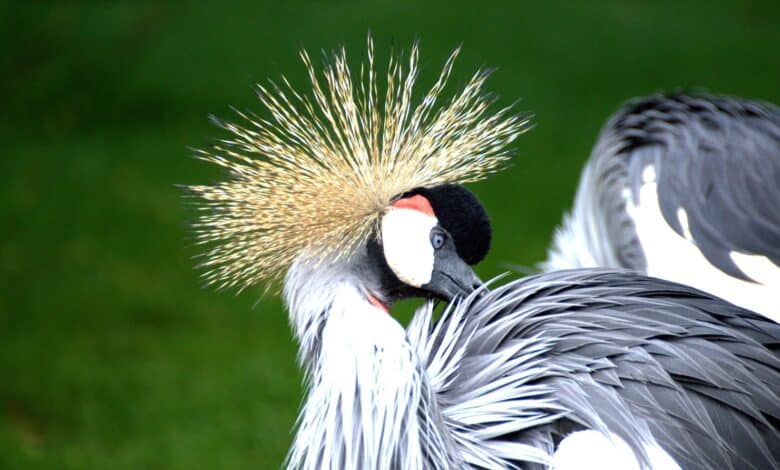
The Grey Crowned Crane, classified as Endangered, has an estimated South African population of around 7 000 birds.
Although numbers in KZN have remained stable through annual aerial surveys, little is known about populations elsewhere in the country.
South Africa is currently the only country in Africa where the species is not declining.
ALSO READ | Book on cranes ‘a tool for future awareness’, says author
The Blue Crane, South Africa’s national bird, has seen more concerning trends.
The species was recently uplisted to vulnerable after suffering a 39% population decline since 2010.
An estimated 30 000 Blue Cranes remain, but researchers believe the birds are gradually shifting their range northwards from the Western Cape and westwards across the Karoo as landscapes change.
“The Crane Census will provide critical insights into current distribution patterns and habitat use,” Fuller said.
The EWT is encouraging birders, farmers, hikers, photographers and anyone who spots cranes while travelling to submit their sightings through the new WhatsApp-based system.
ALSO READ | Making history — two Wattled Cranes are hatched in captivity
Fuller said every observation, no matter how ordinary it may seem, could contribute valuable information that helps shape future conservation strategies.
The number to WhatsApp is 060 086 9053